Rob Allen: Distinguished Executive Alumnus Award
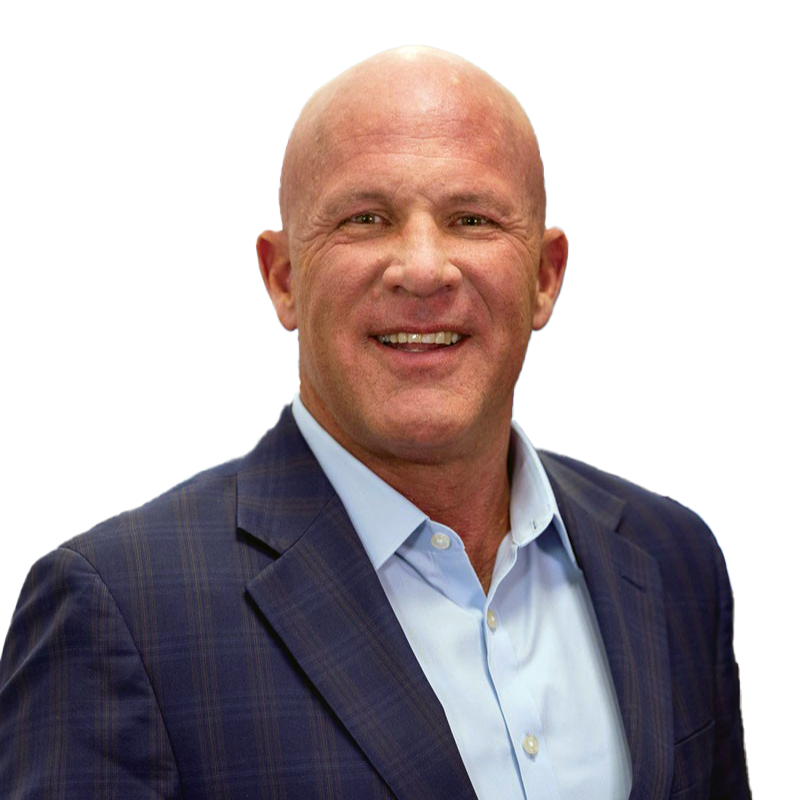
On paper, it’s clear why Rob Allen (MBA ‘91), chief executive officer of Intermountain Health, is the Huntsman School of Business’s 2026 Distinguished Executive Alumnus, the highest honor bestowed upon alumni who exemplify the Huntsman School’s core values and demonstrate exceptional leadership and service throughout their careers.
Allen is an accomplished leader with 35 years of executive leadership in healthcare, including over 30 years at Intermountain Health, a renown nonprofit healthcare system that employs more than 69,000 caregivers across the West. More recently, he was named among the top 100 most influential people in healthcare in 2023, 2024, and 2025, and he currently serves on the board of the American Hospital Association. But Allen’s impact is not captured only in titles or accolades; it’s rooted in lessons he learned long before the boardroom.
Growing up on a dairy farm in Star Valley, Wyoming is where Allen first learned success isn’t handed to you; it’s earned before sunrise and built through hard work and the ability to solve problems when no one else is around to do it for you. That foundation defines his leadership, and it’s why his journey resonates so deeply with students at Utah State University (USU) – a land-grant institution where the values forged in its agricultural heritage continue to shape leaders from all walks of life.
Allen accepted the Distinguished Executive Alumnus Award from Dean Douglas Anderson at USU’s Russell/Wanless Performance Hall on October 29, 2025. Students in the Huntsman Scholar Program packed the hall to learn from Allen and connect with him in a Q&A session and reception. He traced his journey from rural beginnings to leading a six-state health system that includes 34 hospitals and more than 400 clinics, sharing “lessons from the farm” to inspire students in their own efforts to dare mighty.
Kate Neilsen, a freshman studying finance at Huntsman, called the event a critical opportunity that reminded her of her roots and helped her determine what kind of student and professional she wants to become. Neilsen was especially impacted when Dean Anderson made the connection between Allen and students in the audience who share a legacy that stems from values learned in agriculture. Both of Neilsen’s grandmothers grew up on Utah farms, and she says it was inspiring to realize whatever room she walks into she has the DNA to outwork anyone.
“At one point, Dean Anderson had everyone in the audience stand up if they or their grandparents or parents grew up on farms, and it was so cool that everyone stood,” Neilsen said. “My grandmothers grew up working on farms and hopefully I can be a later generation of a hard worker, even though it might be in a cubicle or office.”
Neilsen said she was inspired by Allen’s remarks and was struck by his humility. Allen credits his parents, Blair, a farmer, and Carolyne, a nurse and hospital administrator, for teaching him lessons that have shaped his approach to problem-solving and responsibility. Both were in attendance and he recalled them telling him, “You’ve got to go to college; that’s your ticket to success.” Allen was the first in his family to earn a four-year college degree.
Allen urged students to focus less on whether something is possible and more on how to make it happen. He went back to the farm to illustrate.
“When you’re in rural Wyoming, when you have a problem arise, how much energy do you spend trying to figure out if you can do it, versus how much energy and time do you spend figuring out how to do it? A quote that’s stuck with me through my entire life is ‘What must be done can be done’,” Allen said. “Candidly, sometimes it was the difference between life and death in the early days whether or not you could tackle the challenge you faced. I hope you’ll attack your journey with an attitude that you can accomplish whatever has to be done.”
Allen also emphasized the power of teamwork and servant leadership, describing how organizations can accomplish more when people are aligned around a shared mission. He pointed to Intermountain’s mission of helping people live the healthiest lives possible and described the importance of creating a compelling vision.
During the Q&A with students, Allen shared examples from his career that reinforced his core messages: do the job in front of you exceptionally well, stay grounded in ethical principles, and remain open to unexpected opportunities. He encouraged students to make plans but “don’t pass up opportunities that come your way unexpectedly.”
Allen recalled relocating his family to New Jersey for a career opportunity that involved turning around a healthcare facility facing bankruptcy. With the support of family, he made the cross-country move with his wife, Becky, also a Huntsman graduate, and their three children. It was a difficult decision, but he described the move as both challenging and pivotal for his career and family.
“Your journey in life isn’t all about career,” he said. “You’ll be led to places that will bless your life and the lives of your family and loved ones, if you’re open to those opportunities at the right times.”
In presenting the award, Dean Anderson recognized Allen’s exemplary leadership and urged students to go beyond simply attending the event. He invited them to reflect on what they had learned and translate it into action. Allen’s visit and career, Anderson said, offered a powerful reminder of the Huntsman School’s values: work hard, lead with integrity, and lift others, an example that challenges students to aim higher and to dare mighty things.